

The KEF Speaker That Finally Changed My Mind - Q Concerto Meta review / w. 5 alternatives
- ducurguz
- Jan 5
- 10 min read
I think KEF is one of those companies that you either really like their products, or you think they are overrated. And I think that is more about the philosophy of KEF, that they are always sticking to their guns. It is very transparent, clean, and insightful performance.
Fixing one of the biggest KEF weaknesses
If you like that, it certainly brings a lot of value, as they do that amazingly for an affordable price. They created shockwaves around the globe with LS50 and LS50 Meta, utilising their own patented metamaterial absorption technology. It was a hit, and KEF is a company that is very forward-thinking by giving their products a clean, modern look with a large variety of colors to choose from to fit your room’s ambiance.
This is a company with a large history, but even today in this new hybrid market of hi-fi they remain very competitive, maybe even among the strongest, if not the strongest, speaker manufacturers in the world.
But they did try to experiment a bit, and that experimentation culminated in their top-of-the-line Q bookshelf series, Q Concerto Meta.

So what we know in their Q series of speakers, the Q1 and Q3, is that they use one single driver, the Uni-Q driver, which uses their Meta technology. And Meta technology, according to KEF, can absorb 99% of unwanted distortion that happens in the rear of a driver.
But with Concerto, they decided that a single driver is not enough, that they need to fix their biggest hole in sound. And that is that the sound of KEF, at least in this price range, does lack weight, it does lack showmanship. So they decided, beside their Uni-Q driver, to add a bass woofer alongside to complement it.
This is done knowingly that it will not deliver utmost clarity and precision, but to create a sound that is more grand, a concert-like experience that can be more dynamically rich. And yet have signature KEF sound, but richer.
That is some interesting and very tempting proposition. As I personally like KEF speakers, but I never loved them. It always lacked a bit of drama and passion to them. But this might help change my mind.
Specs/requirements (watch this if you plan to buy them)
But let’s go through a few specs shortly.
As I said, this is a 3-way speaker with sensitivity around 85 dB, which is not bad, not good. It means you will need to give them more power for them to truly open. But it is a 4-ohm speaker, which is making things a bit easier.
They have a dynamic range of 40 Hz up to 20 kHz at –6 dB. When actually listening in a real room, this implies the woofer and cabinet work together to produce meaningful bass down to mid-bass/upper-sub frequencies. It is not something that will shame some expensive bookshelf speakers, but bass does show depth and reach. It is a good bass, but you might want a subwoofer if you are a bass head or want this for movies.
And that treble of 20 kHz is industry standard. If you want to EQ the sound to get a more balanced presentation, you should cut decibels here around –3 to get a more flat, neutral frequency range.

But with the vinyl-wrapped cabinets, 85 dB sensitivity, and just sheer size of cabinets and aluminium bass woofer of 165 mm, and specific placement of crossover, Uni-Q drivers, and Shadow Flare, these speak\ers become power-hungry to truly open.
I think to drive them correctly you will need around 90 to 110 preferable watts in 4 ohms. Nothing spectacular, but some cheaper amps might not drive them correctly. Have this in consideration.
These specs alone tell a story of KEF and how it will sound. It tells that this is a different KEF to its Q and LS brothers, that borrows from their R Reference series ideas and strengths.
Synergy and pairing partners
With that, let’s speak a bit about partnering equipment. I have to say that I had the most fun with Arcam A15. Its sound signature and power output fit perfectly with KEF Concerto. Arcam is a balanced amp with emphasis on detail and brightness, so it worked really great with KEF’s sound signature.
The other two were Cambridge Audio CXA81 and Rega Elex. Cambridge Audio was similar to Arcam, but I preferred the Arcam synergy, though this one was also amazing.
But Rega was also a great experiment if you want to add more treble extension and enrich your sound dynamically. Some might find this combination best, as it makes the upper end of speakers more open and a bit more detailed, allowing it to sound more similar to previous KEF models, if that is something you want to chase.

Sound Quality
But let’s speak how it all translates into music. But first, if you enjoy this review so far and enjoy my content, please consider liking and subscribing to my channel. And if you really, really like this channel, you might consider donating however much you want to help this channel more easily buy equipment for reviewing them. Thanks.
To me, right from the first moment I played these speakers, I knew these ones are special. I have been listening recently a lot to Jonny Greenwood’s soundtrack to One battle after Another. It is a soundtrack that builds around similar motives like 70s thrillers at that time. It has a lot of classical instrumentation, a lot of plucking, a lot of cello and contrabass to show more tension-filled moments.
In those moments, that sound absorbs lower frequencies and needs speakers that can spread them. And I would never in a million years think that KEF could pull it off. But it did. It was pleasantly expanding with attack and definition.
Now before you jump at me, there are speakers in this price range that do better. To get truly the scope of lower soundstage and detailed textures, you will need a subwoofer.
But to have positive things about sound, which I will touch a little bit more later, and have confident and great bass with it is a victory. A victory that this is not a warm sound, yet confident bass with a lot of transparency and insight upstream on the dynamic scale.
When you can hear extension on strings, plucking having slower decay, it tells you about details and textures in bass. And while not having scope and size, it was enough, sure-footed and commanding to communicate greatly with the lower end and give it definition.
Just please, for bass to not be bouncy or bloated, give them space from the back and left and right to breathe, so it would be great.
Having this kind of bass definition helps your music to be more, how to call it, musical, as it creates more definition and body, therefore the sound has more drive and velocity.
But all of that would not be wonderful if the Uni-Q driver was not doing a splendid job as well, allowing a decluttered presentation. Which means listening to something like Steely Dan Gaucho, or Mahavishnu Orchestra, or Inner Flames, which have a lot of instrumentation happening at a similar pace and time, so it needs speakers to have great transparency in order to create room and place around them on the soundstage.

This still is the best quality of KEF, and if you love this, you might want to consider R3 Meta, which does this exponentially well, retaining full strength of KEF with additional richness and openness.
But Concerto allows instruments to breathe, so you will hear the roundness and shape of them on the soundstage. It is clear and vivid production that helps even something that has drab and cold production like Gaucho to show production quality around it with organics and textures.
This helps a lot if you listen to fast, complex music like jazz, classical, or some electronic like IDM or dub, as it helps declutter more and show them properly on the soundstage.
Also, there is a certain smoothness with vocals that sound soft but with weight. That is emphasis on lower mids. They will not be showmanship-style vocals that aim straight at you, but they are very well-rounded. They are separated greatly if mixing is done well, so they are ever-present in your listening session.
Where Concerto is a bit shy is treble, but that might be fine for some people. It is smooth treble that acts more to shave bad decibels from badly produced or bright tracks rather than to be an insight monster.
It has a decent amount of detail. It will try to explain all the pianos, acoustic strings, and high synths to you with precision. It will show details where it will make them present and rounded, but not very forward and with insight that you can expect from some best speakers in this price range. But very decent.
And with all that said, soundstage is decent as well. It opens the speakers decently, as it is an airy presentation with hints of warmth. But then again, it is not best in class. Some Focals and Wharfedales can expand a bit more soundstage. Still, nothing to fault, same like treble—just not best in class.

Alternatives/HIFI inflation
But as this price range is filled with amazing speakers and I had pleasure to interact with them, I would love to compare them. And maybe if Concerto is not your cup of tea, some others are. But I heavily recommend that you go and demo all of these speakers if you can before making a final decision. And something I noticed while browsing prices is how inflation has hit the hi-fi market. A lot of these speakers are now more expensive than when I bought them, and it has been only two or three years. Just a sad thing.
vs. Dali Menuet

I will start with my absolute favourite in this price range, and that is Dali Menuet. I think my favourite is Menuet in the sense that I personally like the sound character more. But overall, I think Concerto just offers more and is easily a better speaker for a lot more people.
What I like about Menuet is that it is a more musical sound with more insight, detail, and drama. I love how vocals and instruments are punchy and lively. I love how even though it sounds constrained, it is clear and has amazing vocal presentation. It is a musical and emotional speaker that does that exceptionally well.
But KEF is more clear and transparent. It has bigger and deeper bass, more soundstage, and fits more versatility in listening scenarios. It also has great midrange and good treble. The miniature size of Dali speakers cannot compensate for much larger Concertos.
But if you need small speakers for a small room, Menuets might be perfect.
vs. Bowers and Wilkins 606 S3
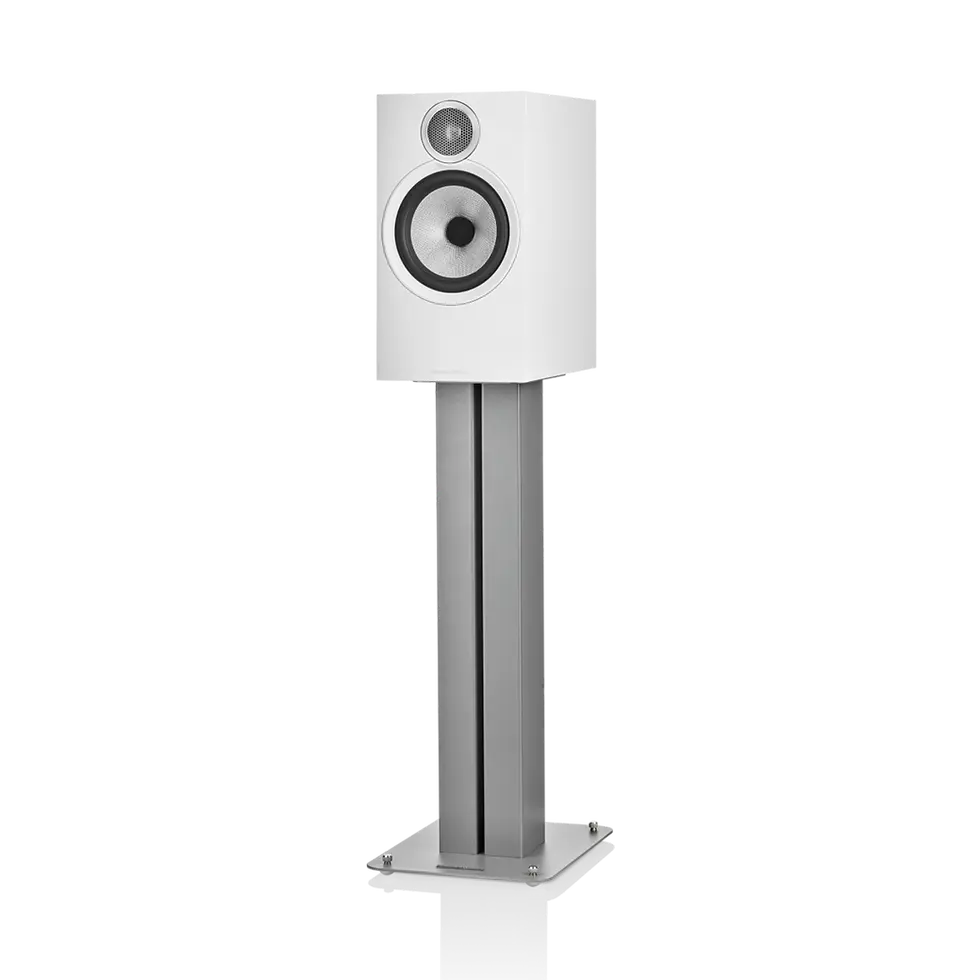
Bowers & Wilkins is another choice. 606 S3 is a specialty speaker, and its specialty is extracting as much detail and insight as possible. It demonstrates amazing technical prowess. It also has decent mids and soundstage. But Concerto comes with more clarity, precision, and far more bass. So you have to consider what you like more. I just enjoy Concerto more, as 606, if paired incorrectly, can cause fatigue fast.
Which Concerto cannot, as it has rather shaved and smooth treble. But if you have a darker system already like Marantz or Denon, and if you love tremendous insight into instruments, organics, and production, the 606 might be more for you.
vs. Super Denton

Now something completely different—Wharfedale Super Denton. If you are into smooth analog vintage sound, you cannot get better than this. But again, like Bowers, this is a bit of a specialist speaker. If you look for warm sound with bigger bass and smooth presentation, but are ready to sacrifice details up top and utmost clarity, then this one is for you. But Concerto has more transparency, clarity, and more details up top.
vs. Sonus Faber Lumina II

Sonus Faber Lumina II was for a long time my favourite speaker in this price range. They are now unfortunately more expensive than when I bought them. Damn inflation. But these are still, if nothing else, the best-looking speakers here. The leather on top, the wood, and the design make them easy speakers to show off.
What Lumina II does best is amazing tonal richness, especially in how it represents vocals. Its imaging and rendition of both female and male vocals is outstanding. It also has nice grip on details and bass. But bass does not extend enough. And paired incorrectly, tweeter detail can be overblown. It needs careful pairing and a warm system.
Concerto is more versatile. It has great bass, great clarity, and enough detail to remain entertaining. While not as detailed as Lumina II, it is easier to integrate and gives more overall.
vs. Focal Aria Evo X No.1

And last is Focal Aria X No.1. While I have a lot of experience with Aria 906, I also have some experience with the new No.1. Inflation has hit these hard as well.
Aria does something no other speaker here does—soundstage width. Its airiness is something to behold. Bass is also great, very mid-bass-centric. It is smooth and easy to listen to, with high-frequency extension from aluminium tweeters.
Concerto and Aria are most similar here. Concerto is more musically balanced and transparent. Aria is dynamically richer but less coherent. Concerto fits more genres and systems more easily.
Why this is a best value speaker on market?
And you read the title, and you are at the end of the video. I think I explained why Concerto is good, but I also need to explain why I think it is the best speaker around 1000 euros. They are not perfect. No speaker is.
There is only a perfect speaker for you. And in this price range, Concerto offers the most versatility with the least weaknesses.
They offer great bass, clarity, easy integration, and flexibility. They are not fussy, not too expensive, and fit many genres well.
They are the speaker I can recommend by default. Maybe their smooth presentation is not for you, and that is why I recommend listening first. But if you want to surprise someone with a 1000-euro hi-fi speaker, this might be the safest bet.
So enjoy this hobby, and if there are speakers I should be mindful of, please tell me in the comments. I would like to learn more.
Thanks for watching this video. Bye!
✅ PROS
Sound & Tuning
Clean, transparent, and insightful KEF signature and quality
Much improved bass weight vs other KEF Q / LS models
Confident, controlled bass with good depth and reach
Bass has texture, definition, and slower decay
Lower mids have weight, giving vocals body
Smooth, non-fatiguing treble
Good balance across genres (rock, electronic, jazz, classical, IDM, dub)
Musically coherent presentation
Decluttered sound even with complex, fast music
Good instrument separation and placement
Instruments have roundness and shape on soundstage
Vocals sound smooth, natural, and ever-present
Forgiving of bright or poorly produced recordings
Good dynamic confidence despite not being a “warm” speaker
Design & Engineering
Uni-Q Meta driver works excellently for transparency
Added bass woofer fixes KEF’s traditional weakness
Concert-like, more grand presentation than previous KEF Q models
Shadow Flare and cabinet design contribute to clarity
Modern, clean KEF design
Wide color options
Feels like it borrows ideas from KEF R Reference series
System Matching & Practicality
Versatile and easy to integrate into many systems
Pairs very well with neutral/clean amps (Arcam, Cambridge Audio)
Does not cause listening fatigue
Not overly fussy about placement (with reasonable space)
Safe recommendation for many listeners
One of the most versatile speakers around €1000
Good “default recommendation” speaker
Offers strong overall value
❌ CONS
Sound Limitations
Treble is a bit shy
Treble is smooth rather than highly revealing
Not an “highest class insight” in the high frequencies
Not best-in-class detail retrieval
Soundstage is good but not class-leading
Bass does not reach true sub-bass
Needs a subwoofer for full low-end scope
Not as emotionally dramatic as some competitors
Power & Setup
Low sensitivity (85 dB)
Power-hungry
Requires a capable amplifier (90–110W preferred)
Cheaper amps may struggle
Needs space from walls to avoid bloated bass


Comments