

Unbelievable Fiio did it again EH13 review
Updated: May 14
EH lineup continues to impress
Hello once again, FiiO EH family of headphones... headphone. Everyone was so impressed by your older brother EH11, your smaller, thinner, and cheaper but nonetheless older brother. And there are big shoes of expectations for you to fill. And I am also in that boat of expecting a lot from you, I loved EH11.
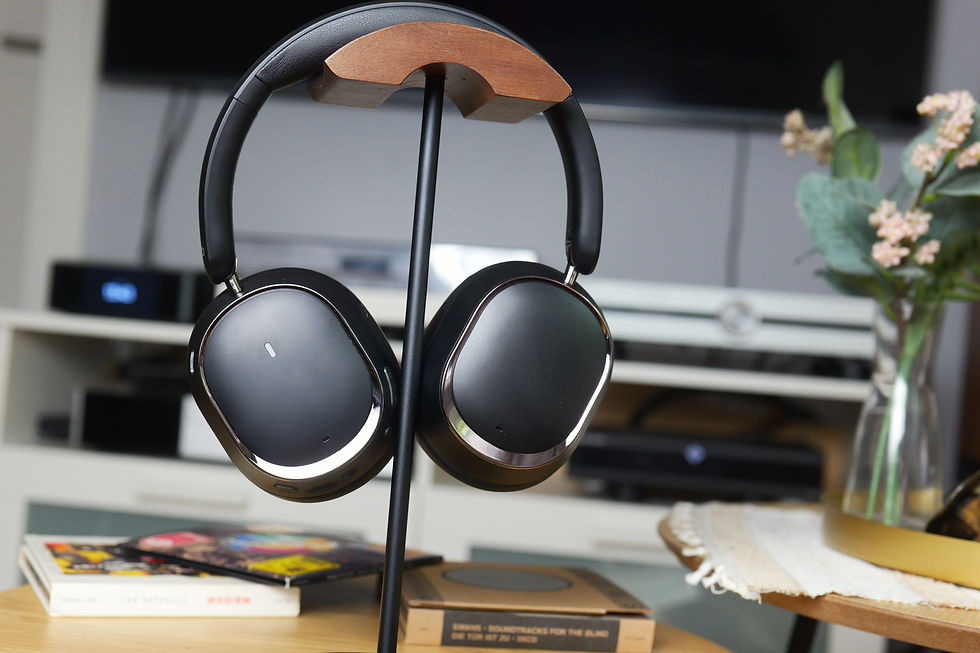
Telling by just holding you, well you are not giving a run for the money for more expensive models, but this is just an okay plasticky build, though it looks very nice. Padding, straps, and cups feel generic and a bit stiff. But I love the metallic rings, LED light, and these rubbery but nicely sized buttons.
But you know what my grandma says, never put a windshield wiper on a goat, but my granny was very old and senile when she said that. But let’s go with the “it is more what’s inside that matters” catchphrase, and let’s find out!

Build Quality
Let’s get real, even before I got these headphones I knew that these were going to be special ones. FiiO’s previous success with EH11 proved that they are doing something great, and this one is only 20 dollars more expensive. But it is a full-size headphone, it has LDAC, it has ANC, app support, long battery life, and a 40mm dynamic driver. It is just a crazy amount of features for the money, and for me not to recommend FiiO, they would need to do something insanely bad for 50 dollars of asking price.
This feels like FiiO is ready to completely disrupt the ANC market. And while I do not think this is going to challenge your flagship Sonys, Boses, or Bowers, it is crazy how close to some of them it comes.
I have to say that FiiO goes for a very minimal streamlined design, and I love it for that. The FiiO EH13 goes for a clean and understated design instead of trying too hard to look futuristic or flashy. While I said in my intro that it feels plasticky, it does, but honestly I do not think this is very cheaply made, it does not feel like a toy. It just feels like an area where FiiO did not spend all its resources, and that is needed to lower the price. The folding mechanism seems surprisingly sturdy for this price range, and the earcups rotate inward which makes them easy to throw into a backpack. FiiO clearly designed these with portability in mind. There is no carrying case included, which is understandable considering the price, although a soft pouch would have been nice.
Comfort seems generally good, but not perfect. The pads are soft and decently cushioned, though the synthetic leather can get warm during long sessions. Still, for this kind of money, the EH13 honestly looks and feels more premium than it has any right to.

Specs, Features and FiiO App
But let’s finally talk about really what is important, and that is the innards. And this is where FiiO becomes genuinely impressive. FiiO packed these headphones with features that are usually reserved for products costing two or three times more.
It is a 40mm dynamic driver with a sapphire-coated composite diaphragm, hybrid ANC rated up to –42dB, LDAC Bluetooth codec support, Hi-Res Audio Wireless certification, and a super amazing 75 hours of battery life.
Also amazing is that it can connect via a 3.5mm cable, but unfortunately it will only use its own power and not power from the source, so it is not a backup for when the battery dies. There is also an excellent FiiO app with different parametric equalizers, ENC microphone, and foldable design.
You can see this is a big list of great stuff that FiiO offers to you on the cheap.
The battery life especially is kind of ridiculous for the price. Even with ANC enabled, around 45 hours is extremely competitive. Without ANC, FiiO claims up to 75 hours, which is honestly insane for a modern wireless headphone.
Another huge win is LDAC support. Most headphones in this price category still rely on basic SBC or AAC codecs, but the EH13 supports high-resolution LDAC streaming up to 990kbps. If you use Android or a compatible DAP, this alone gives the EH13 a big advantage over many mainstream competitors.
About the FiiO app I already spoke a lot, and it will be of great use to you with these headphones, I know it was for me. And we will talk a little bit later about that.
And the shocking ANC performance, while certainly not the best in the class, was good. Far, far better than anything I tried in this price range. The battery floored me and ANC shocked me a lot.

Sound Quality
So let’s talk about the sound quality. It is make or break for any headphones. Now I glowed up when I spoke about EH11, it was an incredible sounding device for 40 dollars. But I think these two devices sound drastically different, which is to be expected. As EH11 was an on-ear open-back headphone, therefore it sounds like one. A brighter, detailed experience that lacked a bit on the low end. And what you certainly get with EH13 is the opposite.
Therefore the low-end sound completely takes the headphones from the bright sound of its sibling to darker territory. These are fuller, more bass-rich headphones than you would expect from closed-back headphones.
And this has always been a bit of an Achilles heel to many headphones in this price range. When they focus on a warmer sound, they create them to be just that: warm headphones that do not bring any excitement in the mids and treble. While I would love it if that was not the case here, it is important to say that mids and treble are actually not bad, but still a bit muddy.
The EH13 is not trying to be a perfectly neutral audiophile headphone.
Instead, it aims for an enjoyable and easy-listening tuning with solid technical performance underneath.
Bass is full and punchy. It truly is a headphone for those who love to boop and boom. There is presence from the upper bass that makes it punchy, while sub-bass is not so pronounced, so do not expect some extended explosions and sub-bass rhythms or a truly massive sound. But your bass guitar and kick drum truly take center stage here. And for electronic and some types of rock and metal, it is a great headphone. Because that bass will carry the energy with it, and it is in some sense a musical headphone. But it does bleed into other frequencies.
But we need to speak about the midsection, probably the weak point of these headphones. The sound can be described as tight, there is not much air to breathe between instruments. I cannot say that this is awful, it is not, though this is not a hi-fi headphone, but I never felt that it allowed me too much insight into production. The timing and transients are not so exposed, and therefore while there is space, it is very overridden by bass and treble. It is not what I would call clear and transparent or neutral speakers, no, this is far from it. So that means for example vocals, which lie on all parts of the frequency spectrum but sit mostly in the midsection, will feel laid back and in the background.
But I felt male vocals of Nick Cave, Leonard Cohen, and similar baritone singers were rendered with the heft and gravitas they need to sound with authority. But they always lacked the showmanship to expand themselves to the listener. To have room and roundness around them.
And that is the story for most instruments. I can also say midsection quality heavily depends on a few things: quality of production obviously, also quality Bluetooth source, you know, aptX HD and LDAC, and also it improves a little bit more when you use a cable. But let me be honest, the quality difference between cable and a quality Bluetooth source was small and not more impactful like I expected. I think it is because 3.5mm is a very secondary thing to these headphones.
But what about instrument extension, what about that? Pianos, guitars, some synths that expand a lot, and a lot of expression lies in treble. Or those cymbals and percussions. Well while not the best, I can say I am surprised a bit. With well-produced and mastered songs, there is a feeling of extended soundstage with drums appearing in the left and right corners of the soundstage. Bass and treble, when extended, obviously extend soundstage, but also clearer and more airy mids do as well. So treble was pleasantly present and detailed.
There is that thinness about when you hear drums, that you know if it was not so heavily tuned toward warmer sound it would be bright. So that is great that bass actually shelves the treble a little bit and makes it manageable, which is a good thing. As treble is definitely a plus here. So details will be present in listening sessions.
The soundstage was okay, I do not have many negatives and positives here. It was decent, but from all that I mentioned earlier, you understand the sound is a bit tight. So it will not have the quality of airy production that just opens the soundstage left and right.

EQ and Pairing Suggestion
I think what is good is that with the FiiO app, or any other app for that matter, you can equalize these headphones. And just adding a bit more sparkle in the midsection and a tiny bit in treble, you can transform these headphones into something more interesting.
My recommendation, and this is kinda subjective, is that around 90Hz you remove 2.5dB, at 220Hz you can also remove 1.5dB, and at 2.5kHz you can add 2.5dB, and at 4.5kHz you can add 1.5dB. That is to balance out the bass and enhance and add midrange energy and clarity. You might, if you want, add a bit more dB at 9kHz if you please.
This leaves fun sub-bass, but fixes vocal recession, cleans up muddiness a little bit, and adds a bit of air to it. So try it and experiment with it. This was my recommendation, but in general you can experiment around it and just reduce mid-bass slightly, add a 2–3kHz vocal lift, and some treble around 8 to 10kHz for best results.
And when we are talking about pairing, as I mentioned earlier, LDAC does help improve the sound, so any source or phone with LDAC enabled does make these headphones sound better. I will recommend Questyle QCC Dongle Pro here, to help your headphones sound better directly from your phone.
Regarding DAPs, aim for the ones that are neutral or slightly bright. Those work the best. FiiO JM21 could be a great pairing.
vs Soundcore Space One
Soundcore Space One is the More polished comfort and app experience with stronger mainstream tuning.
The Space One feels more consumer-friendly immediately. Better comfort, easier tuning, more polished software.
But the EH13 feels more “audiophile-minded.”
The EH13:
Has better EQ flexibility
Sounds cleaner after tuning
Feels less bloated in bass
Has better raw value
The Space One:
Is easier out of the box
More comfortable
Better transparency mode
If you like tweaking sound, the EH13 wins easily.
vs Anker Soundcore Q45
Anker Q45 is The more mature and refined ANC option with stronger overall polish.
The Q45 is the more complete premium product overall.
Better:
ANC refinement
Comfort
App ecosystem
Build polish
Spatial presentation
But it also costs noticeably more.
The EH13 is basically the “budget audiophile hacker” version of the Q45. Less refined, but surprisingly competitive technically once EQ is applied.
vs 1MORE Sonoflow
1MORE Sonoflow is a smoother and more relaxed competitor with easy-listening tuning.
The Sonoflow is probably the safer tuning.
It sounds smoother and more natural immediately without EQ. But the EH13 has:
Better feature flexibility
More adjustable sound
Better codec support implementation
More energetic presentation
The Sonoflow is for people who never want to touch EQ.
The EH13 is for people who enjoy customizing.
Conclusion
What can I say, EH13, you did good. You really did. I cannot say you are the magical, impossible headphones in this price range. But you overdeliver in this price range, that is certain. You provide a big list of features, okay build and comfort, and you bring great sonics.
And all of that and you do not ask much for your services. You are a dream for many audiophile listeners using you. You still need a great source and proper EQ to work best, as that midsection and vocals are too recessed and muddy, and there are some competitors that are creeping around, but for more money.
In the end you offer the most of everything in this price range, and you are an unbeatable value for now. You are an absolute steal and may I say a proper proud member of your family.
And therefore, I was considering a 9, but I think maybe more realistically you are an 8.5, as there are things needing improvement. And I was considering this high of a score because of your price. Please do not be mad, just learn from your mistakes, and I cannot wait to meet your new brother and be shocked again.
Hope you enjoyed this content, if you did please consider becoming a member, liking, and subscribing. Keep daydreaming and see you in the next video. Bye.
Final Score 8/10
Learn more about Fiio EH13:
Pros
Excellent value for the price with a huge feature set
LDAC support at a budget price point
Surprisingly effective ANC for the category
Massive battery life, especially without ANC
Clean and minimal design
Foldable and portable construction
Better build quality than expected for the cost
Strong, punchy bass presentation
Fun and energetic tuning for electronic, rock, and metal
Treble has decent detail and extension
Sound improves noticeably with EQ
Excellent EQ flexibility through the FiiO app
Supports wired 3.5mm connection
Competitive technical performance after tuning
More “audiophile-minded” than many mainstream ANC headphones
Better raw value than several competitors
Good codec implementation and Bluetooth performance
Pairs well with neutral or bright sources
Bass-heavy tuning avoids harsh treble fatigue
Better feature flexibility than some rivals
Surprisingly close to more expensive ANC headphones in some areas
Cons
Plasticky build and somewhat generic materials
Pads and headband feel a bit stiff
No carrying case included
Synthetic leather pads can get warm over time
Midrange is recessed and somewhat muddy
Vocals feel laid back and lack openness
Sound can feel tight and lacking air
Not a clear, transparent, or neutral tuning
Bass bleeds into other frequencies
Sub-bass extension is limited
Technical detail retrieval is only average
Wired mode depends on internal battery power
3.5mm input feels secondary in implementation
Sound quality heavily depends on EQ and source quality
Requires tweaking to sound its best
ANC is good for the price, but not flagship level
Comfort is decent but not class-leading
Soundstage is only average
Some competitors offer better polish and refinement
Out-of-box tuning is less balanced than rivals like the Sonoflow


98win com mình mới lướt thử vì thấy bạn bè nhắc hoài, kiểu tò mò xem giao diện ra sao thôi. Vào cái là thấy trang làm khá thoáng, nội dung chia theo từng khung nên nhìn phát biết mình đang ở mục nào, không bị ngợp chữ. Mình cũng để ý phần giới thiệu họ đặt mấy dòng về uy tín với bảo mật khá nổi, đọc lướt qua cũng thấy yên tâm hơn chút. Menu nằm chỗ dễ nhìn nên chuyển qua lại nhanh, không phải mò nhiều hay bấm vòng vòng. Nói chung cảm giác dùng ổn, nhất là cách họ căn các tiêu đề và khung thông tin thẳng hàng, nhìn rất dễ theo dõi.
Rikvip mình mới ghé thử vì thấy bạn bè nhắc hoài, vào chủ yếu xem trang họ trình bày ra sao chứ chưa chơi gì. Cảm giác đầu tiên là bố cục khá “dễ thở”, kiểu mỗi phần tách thành khối rõ ràng nên lướt nhanh vẫn nắm được ý chính. Mình để ý họ có ghi điều khoản điều kiện được công khai ngay trên trang chủ, đọc qua thấy đỡ phải đi tìm lung tung. Chữ tiêu đề với đoạn mô tả ngắn đặt ngay dưới nên mắt không bị rối, nhất là khi xem trên điện thoại. Menu cũng nằm chỗ dễ thấy, bấm qua lại mượt, không bị vòng vèo. Nói chung mình thích cách họ…
GG88 mình mới ghé thử vì thấy bạn bè nhắc hoài, chủ yếu vào xem giao diện chứ không có ngồi đọc kỹ. Cảm giác đầu tiên là trang làm theo kiểu chia khối rõ ràng nên nhìn khá thoáng, kéo xuống không bị rối mắt. Mình lướt qua thấy có mấy bài dạng giải thích cho người mới, kiểu “Bao lô là gì?” nên nhìn tiêu đề là hiểu ngay đang nói về gì, khỏi phải đoán. Thanh menu đặt chỗ dễ thấy, bấm qua lại giữa các mục cũng nhanh, không bị lạc. Nói chung ai chỉ muốn xem trang có gì thì lướt vài phút là nắm được, vì tiêu đề bài viết nổi bật và các…
https://gg88vn.net/ mình ghé thử vì lướt thấy người ta nhắc, kiểu vào xem giao diện ra sao thôi. Trang load khá nhanh, nhìn tổng thể thoáng mắt chứ không bị rối. Mấy phần nội dung được chia theo khối nên kéo xuống một đoạn là hiểu họ đang nói gì, không phải đọc lan man. Mình có để ý họ có nhắc tới bảo mật với giao diện 4k, nên chữ và khung thông tin nhìn sắc nét, không bị mờ hay lem. Menu cũng nằm chỗ dễ thấy, bấm qua lại mấy mục không mất công tìm. Nói chung cảm giác dùng nhẹ nhàng, nhất là cách họ đặt tiêu đề rõ và các box nội dung xếp theo…